
Mutual Aid:

The basic idea of Shinto is that all things have a spirit. All things have anima, breath, essence, presence. Which makes animation and anime such a beautiful concept, not just as a word but as a philosophy: to bring life to what already has life. The artist then is not inventing spirit from nothing. The artist is listening. Translating. Hearing the voice already inside the object, the tree, the river, the creature, the bar of soap. Art becomes the act of helping others hear what has always been speaking.
The Zen monk Dōgen wrote, “The green mountains are always walking.” Not metaphorically. Not poetically. Literally. The mountains are walking. If you have ever done mushrooms in a gorgeous setting, you kind of know this to be true. The mountains walk and the trees breathe. Reality itself is alive and in motion. Buddhism asks us again and again to loosen our rigid distinction between what is alive and what is not, between self and other, subject and object. No separation. The separation is often an illusion of perception.
If all things have spirit, then perhaps all things also have desire. The pot enjoys making food. The broom enjoys sweeping. The book enjoys being opened and read. The window wants light to pass through it. We honor objects by allowing them to fulfill their nature, and in return they care for us. This is a kind of mutual aid.
Not mutual aid as a slogan, but mutual aid as cosmology and symbiosis.
We take care of the objects that take care of us. We sharpen them, clean them, oil them, mend them, thank them. Not because we are sentimental, but because relationship requires reciprocity. The knife feeds us, so we keep it sharp and give it crisp vegetables to cut. The shoes carry us, so we repair their soles and clean their laces. The kettle and espresso maker sing water into warmth every morning, so we descale it gently and place it back with care.
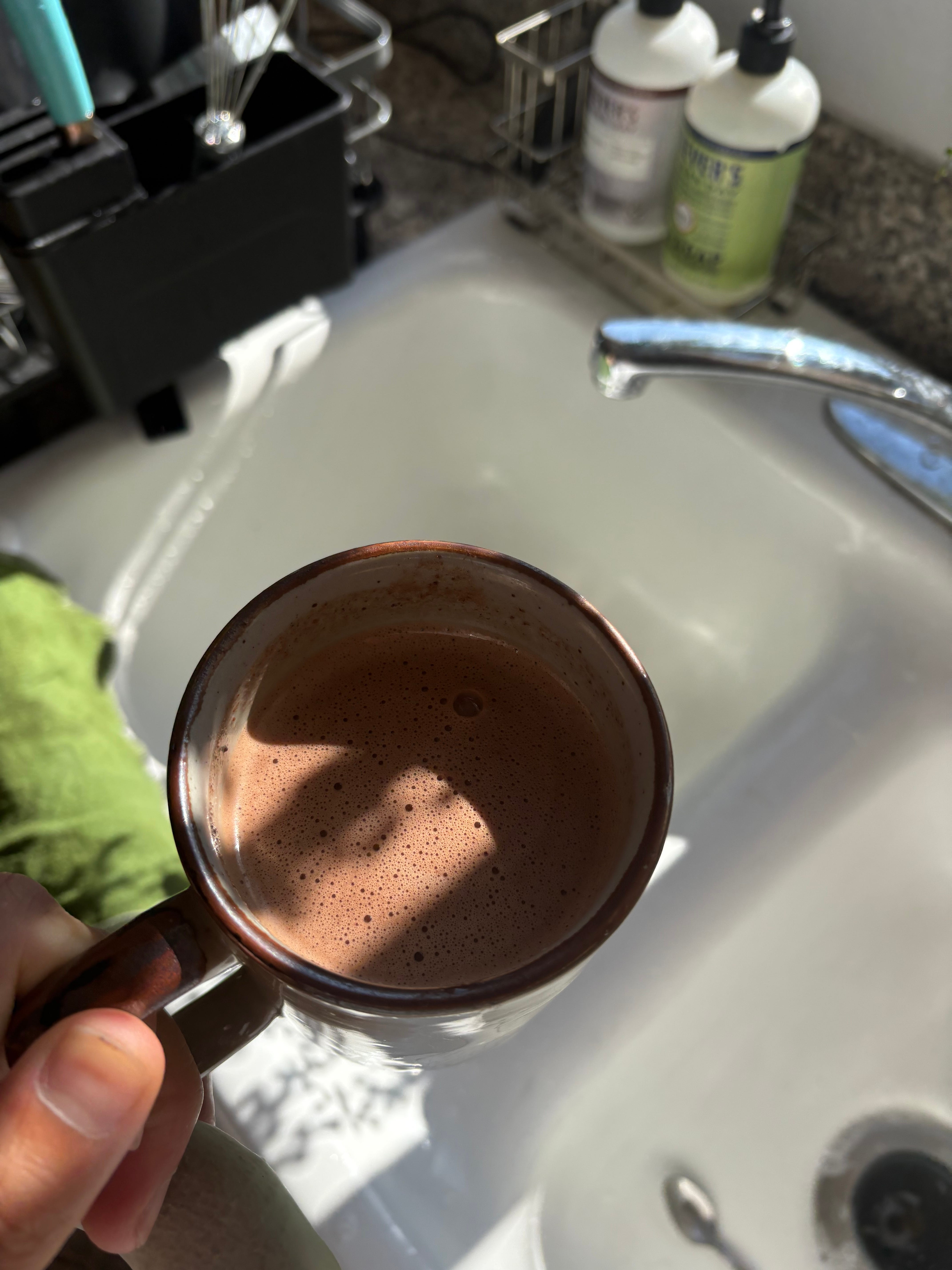
Pot wants to cook. Camera wants photos. Knife wants to cut. Pen wants to write. Chair wants someone resting in it. A bell wants ringing. A garden wants tending. The meditation cushion wants your body to soften.
And maybe this is why so much modern life feels spiritually dead. We are surrounded by objects we do not love and do not repair. Things built to break. Things shipped by robots. Things upon things upon things ordered with one click. Things we throw away without gratitude. We no longer live with objects; we consume them. We rarely enter relationship with the world around us, as much as extract from it.
In Buddhism, suffering often begins in the delusion that we are separate from life instead of expressions of it. We imagine ourselves as lonely moving through a world of matter, rather than participants in an endless web of living interdependence. Thích Nhất Hạnh called this “interbeing.” The paper contains the cloud. The cloud contains the rain. The rain contains the tree. The tree contains the logger. The logger contains the bread he ate this morning. Nothing exists independently. Everything belongs to everything else. A bowl is not just a bowl. It is earth, heat, labor, lineage, imagination, sweat, water, play, blood, mineral, hand.
When I wash dishes, I try to remember this. Not always successfully. Sometimes I am still rushing. Still trying to finish the task instead of being the moment. But occasionally, I can feel the sponge getting to sponge, I can feel its joy. I can feel the plate enjoying the cleaning. I can feel the ceremony hidden inside ordinary things. The warm water running over my hands. The plate that held nourishment. The sponge slowly wearing down over years of service. The beautiful intimacy of maintenance and routine.
There is a reason why many a zen teacher will remind you to, “Chop wood. Carry water. Sweep the floor.” Because that is the heart of this practice, Buddha or enlightenment is not after the sweeping, it is the sweeping. It’s not the destination the water arrives at, it’s the water. Buddhist practice is about remembering to simple tasks with reverence. Sweeping floors. Folding robes. Cleaning bowls. Not because we are obsessed with cleanliness, but because attention itself is a form of devotion, as the great poet and sage Mary Oliver reminds us, “Where we put our attention reveals our devotion.” To care for something fully is to acknowledge its existence. To say: I see you. You belong here too. No me without you.
And so we care for the things in our life that give us our life. We build our muscle of care, and our capacity to care. We make care sacred again. We turn maintenance into love.
Mutual aid is older than economics. The forest practices it. Mycelium practice it. Rivers and roots and bees understand what we have forgotten: survival is collaborative. Nothing thrives alone. Even breath is mutual aid. Trees exhale what we inhale. We exhale what they inhale. Every breath is a kind of kiss between species.
The Buddha touched the earth for a reason. Not to escape the world, but to belong to it. Awakening is not becoming less dependent, but becoming more aware of our dependencies with gratitude.
To live this way is to stop seeing the world as inert. To stop imagining ourselves as the only thing with consciousness moving through a dead universe. Maybe peace begins when we understand that the world is constantly asking to participate with us.
The pot says: let me feed your family.
The blanket says: rest.
The candle says: I will hold a small sun for you.
The floor says: I have carried every version of you.
And perhaps our task is simply to listen well enough to answer back: Thank you. I’ll take care of you too.
Engaged Liberation is a labor of love. But it is labor. If you love it, support it for less than $5/mo. Thank you!
ah, rituals.